
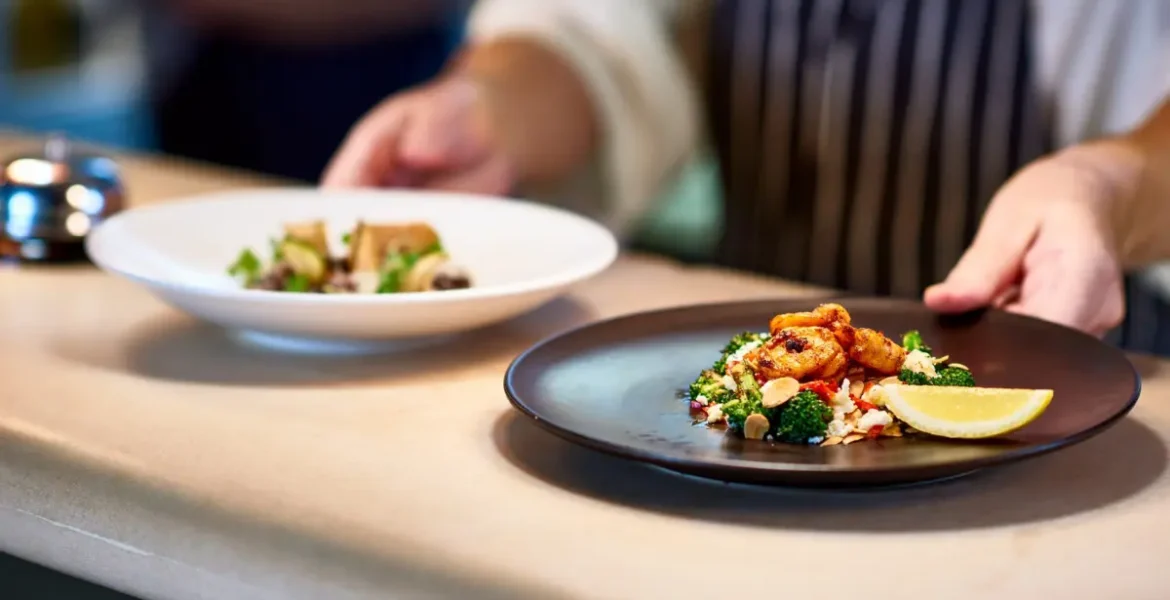
Why Fine Dining Portions Are Small: Science and Psychology
Walking into a Michelin-starred restaurant for the first time can be a bit of a culture shock. You see a massive, pristine white plate arrive, and in the dead center sits a single, perfectly seared scallop or a dollop of wagyu beef the size of a thumb. The immediate question most people ask is: why fine dining portions are small? The short answer is a mix of sensory science, kitchen economics, and storytelling.
Fine dining isn’t just a meal; it’s an 8 to 12-course performance. By serving smaller portions, chefs prevent “palate fatigue,” ensuring every bite tastes as incredible as the first, while allowing you to experience a massive variety of flavors without feeling physically overwhelmed before the dessert arrives.
The Science of Satiety: Why Fine Dining Portions Are Small
One of the most fascinating reasons behind these tiny plates is a neurological phenomenon called Sensory-Specific Satiety.
1. The Three-Bite Rule
Scientific research suggests that our enjoyment of a specific flavor peaks during the first three bites. By the fourth or fifth mouthful, your taste buds become bored, and the pleasure response in your brain begins to plateau.
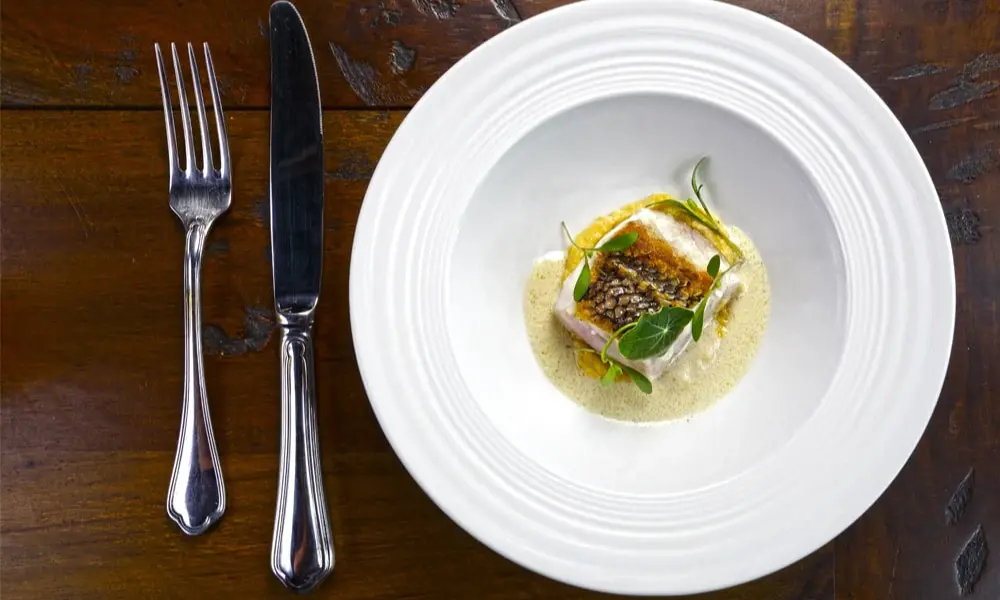
In luxury restaurant presentation, chefs exploit this by providing only the peak experience. By the time you’ve finished a small portion, your brain is craving the next new flavor profile, keeping your dopamine levels high throughout a three-hour meal.
2. The Leptin Lag and Digestibility
It takes about 20 minutes for your stomach to signal to your brain that it’s full. In a standard casual dining setting, you might eat a massive pasta dish in 15 minutes, feeling stuffed only after you’ve overeaten.
Fine dining slows the pace. Because fine dining food portion size is moderated across many courses, your body has time to process the nutrients and hormones like leptin. You aren’t being cheated out of food; you are being given time to realize you are actually full. Furthermore, smaller portions are easier on the digestive system, preventing the food coma that often follows a large, heavy meal.
The Economics of Excellence: Why Fine Dining Portions Are Small
Beyond the biology of the brain, there is a very practical, behind-the-kitchen-door reason for these portions: the sheer cost and labor involved in every micro-component.
The Micro-Prep Reality
A single plate in a high-end restaurant often contains elements that took days to prepare. A demi-glace sauce might take 48 hours to reduce from gallons of stock into a rich, syrupy glaze. If a chef served a standard bowl of that sauce, the cost of the plate would triple.
Sourcing the Impossible
When a menu features A5 Wagyu from Japan, truffles from Italy, or rare sea urchin, the luxury restaurant presentation must reflect the scarcity of the ingredient. These items are so rich in fat and flavor that a larger portion would actually be unpleasant to eat. Small portions allow the restaurant to offer world-class ingredients at a price point that while high stays within the realm of a tasting menu.
Cost Breakdown: Volume vs. Value
To understand the financial logic, consider the difference between a high-volume chain and a fine-dining establishment:
| Feature | Casual Dining (High Volume) | Fine Dining (High Value) |
| Primary Goal | Caloric Satiety | Sensory Experience |
| Ingredient Source | Industrial/Wholesale | Artisanal/Small-batch |
| Staff-to-Guest Ratio | Low (1 waiter for 8-10 tables) | High (Often 1:1 or 2:1) |
| Preparation Time | Minutes (Pre-made components) | Hours/Days (From scratch) |
| Plate Focus | Quantity & Consistency | Complexity & Innovation |
The Culinary Narrative: Why Fine Dining Portions Are Small
Think of a standard meal like a movie. You have a beginning, a middle, and an end. Now, think of a fine dining tasting menu like a collection of short stories or a poetry anthology.
Variety Over Volume
If you were served a full-sized steak at the beginning of a 12-course meal, you wouldn’t make it to course four. The goal of fine dining food portion size is to provide a gastronomic journey. This variety allows a chef to experiment with contrasting temperatures, textures, and cultural influences in a single sitting.
Course 1-3: Palate cleansers and light acidity (Amuse-bouche).
Course 4-7: Increasing richness (Seafood, handmade pastas, foams).
Course 8-10: Heavy proteins (The climax of the meal, like venison or aged beef).
Course 11-12: Sweetness and transition (Pre-dessert, main dessert, and mignardise).
Understanding Why Fine Dining Portions Are Small Through History
The shift toward smaller plates wasn’t an accident; it was a revolution in the culinary world.
The Rise of Nouvelle Cuisine
Before the 1960s, French Grand Cuisine was characterized by heavy sauces and massive platters. In the mid-20th century, chefs like Paul Bocuse pioneered Nouvelle Cuisine. This movement prioritized the natural flavor of the ingredient over heavy masking. To do this effectively, portions had to shrink so the focus remained on the clarity of the food.
Quality Control and Precision
In a kitchen pushing for a Michelin star, precision is everything. It is infinitely easier to maintain the perfect temperature and texture of a 2-ounce piece of fish than it is for a 12-ounce slab. Small portions allow the pass (where the head chef inspects plates) to ensure every single element is mathematically perfect.
Psychological Factors: Why Fine Dining Portions Are Small
Our brains perceive value in ways that have nothing to do with the size of our stomachs.
The Scarcity Principle
Human beings are wired to value what is scarce. When a plate has a small amount of food, your brain instinctively flags it as rare or special. This psychological shift causes you to eat more mindfully. You chew slower, you identify individual herbs, and you savor the mouthfeel. This mindfulness is a core part of the luxury experience.
Luxury Restaurant Presentation: The Power of Negative Space
There is also a design element to how the food looks. In art, creators use negative space to draw the eye toward the most important object. Placing a small portion on a large, custom-made ceramic plate signals that the food is precious. This heightened focus actually improves the perceived taste a phenomenon often called gastrophysics.
Conclusion
Understanding why fine dining portions are small changes the way you look at the check at the end of the night. You aren’t paying for bulk or volume you are paying for a curated scientific experience.
From the sensory-specific satiety that keeps your brain engaged to the economics of rare ingredients and the luxury restaurant presentation that treats food like art, every millimeter of that plate is intentional. The next time you see a tiny portion, remember: the chef isn’t holding back.
They are giving you the very best of an ingredient before your taste buds have the chance to get bored. Fine dining is an investment in your palate’s education, proving that sometimes, less truly is more. For more insights into luxury lifestyle and culinary trends, visit orilea.com.
Frequently Asked Questions
Do you leave fine dining hungry?
Guests rarely leave hungry because a full tasting menu includes 7 to 15 different courses. While each fine dining food portion size remains small, the cumulative caloric intake matches or exceeds a standard three-course meal. The slow pace also gives your brain time to register fullness.
Why do fancy restaurants have small portions?
Fine dining restaurants serve small portions to prevent palate fatigue and maintain luxury restaurant presentation. Chefs focus on why fine dining portions are small by prioritizing the quality of rare ingredients and the complexity of the cooking technique over sheer volume.
Why are the plates so big in fine dining?
Chefs use large plates to create a visual frame for the food, which highlights the artistry of the dish. This use of negative space focuses your attention on the textures and aromas, making the experience feel more exclusive and high-end.
How many calories are in a Michelin star tasting menu?
A typical Michelin-starred tasting menu contains between 1,200 and 2,500 calories. Even though the fine dining food portion size looks tiny, the frequent use of rich fats, concentrated reductions, and multiple courses provides significant nutritional density.