
IMF World Economic Outlook 2025: Latest Forecast and Key Risks
IMF world economic outlook 2025 is one of those reports that gets quoted everywhere by news outlets, economists, investors, and even policymakers because it captures where the global economy seems to be heading and what’s shaping that direction.
Still, a lot of people run into the same problem: they assume there’s only one outlook for 2025. In reality, the IMF updates its projections several times during the year. So, if you read just one version, you might walk away with the wrong impression.
In 2025, the IMF released major forecast updates in January, April, July, and October. While April and October are full World Economic Outlook (WEO) reports, January and July are shorter updates. Because of that, it’s important to know which release you’re referring to when you say “the IMF outlook for 2025.”
What the October IMF world economic outlook 2025 Is Really Saying
At its core, the October 2025 report paints a global economy that’s still moving, but not confidently. In other words, it’s not falling apart, yet it’s also not strong enough to feel stable. Even though some regions have held up better than expected, the overall momentum remains fragile. Therefore, the IMF’s tone stays cautious.
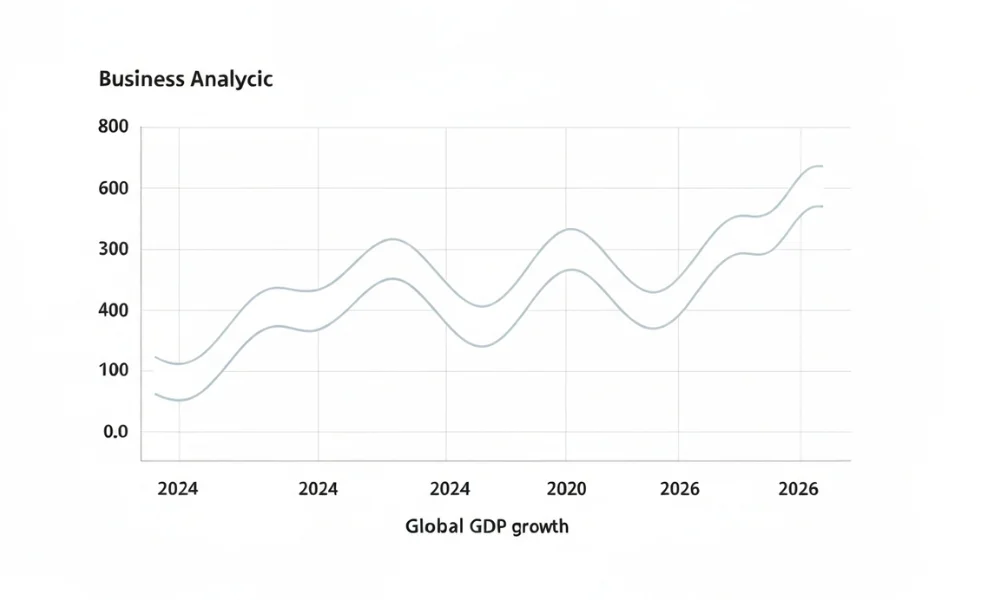
For 2025, the IMF expects global growth to slow slightly compared to 2024. That slowdown isn’t dramatic, but it matters because it reflects ongoing pressures weak long-term productivity, shifting trade relationships, and policy uncertainty that keeps businesses and households on edge.
Meanwhile, inflation is expected to cool in many parts of the world. However, the IMF continues to point out that inflation in the United States may not drop as quickly or as smoothly as policymakers would like. So, the real takeaway isn’t simply “things are fine.” Instead, it’s this: the global economy is holding up, but the floor still feels shaky.
Why the IMF World Economic Outlook 2025 Is Not One Single Forecast
A big misunderstanding is thinking that the “WEO 2025” refers to one fixed number. Actually, the IMF’s forecasts change as the year unfolds. That’s not a flaw it’s the entire point of regular forecasting. Because global conditions shift quickly, the IMF adjusts its assumptions, and the projections move with them.
So, if you want the full story, you have to look at 2025 as a moving timeline, not a single snapshot. For example, earlier projections were more optimistic. Then, as uncertainty increased, the IMF became more cautious. Later on, when the world economy showed more resilience than expected, the numbers improved slightly again.
Therefore, what you see in the October report isn’t just a “final result.” It’s a reflection of how conditions evolved across the year. Most importantly, these revisions reveal what’s driving the global outlook: trade policy decisions, inflation patterns, financial stability, and business confidence.
The Most Useful Way to Read the 2025 Timeline
Instead of digging into every technical table, it’s much easier and more useful to focus on what changed and why. That approach gives you clarity without turning the WEO into a research project.
Here’s the simplest way to understand the year:
In January, the IMF began 2025 with a moderately steady global growth outlook.
In April, projections became noticeably more cautious as uncertainty and trade disruption weighed on expectations.
In July, forecasts improved a bit because the world economy showed short-term resilience.
In October, growth expectations strengthened again, although the IMF still stressed that the risk balance remains tilted downward.
So, when someone asks, “What’s the IMF saying about 2025?” the best answer isn’t just a number. Instead, it’s the pattern: the outlook dipped sharply in the spring, then stabilized and improved modestly later in the year.
What Actually Caused IMF Forecast Revisions in 2025
The IMF didn’t change its forecasts randomly. These revisions were triggered by real shifts in conditions especially around trade, demand, and financial stability. In fact, one of the biggest drivers was a behavior economists often call front-loading. Front-loading happens when businesses and buyers speed up their activity early because they expect costs to rise later.
For example, if companies believe tariffs will increase, they may import goods sooner to avoid higher future prices. As a result, growth can look stronger in the short term. However, that short-term boost often fades. Therefore, stronger growth in one quarter doesn’t always mean long-term momentum is improving.
At the same time, the IMF adjusted some of its policy assumptions as events unfolded. Because those assumptions changed, later projections looked somewhat better than the April forecast. Still, the IMF’s message remained careful: even if growth improves slightly, the global economy is still navigating uncertainty, not escaping it.
So, yes, the forecast moved upward later in the year but it didn’t suddenly turn optimistic.
The Hidden Message Most Readers Miss: Risk Still Dominates
Even when a forecast improves, the IMF repeatedly emphasizes one major warning: downside risks still carry more weight than upside surprises. That point matters because it affects how you should interpret the headline numbers. In other words, these projections are not guarantees they’re baseline expectations that can weaken quickly if risks materialize.
Here are the risks the IMF consistently highlights as the most important for 2025:
Trade disruption and tariff escalation
Geopolitical instability and conflict spillovers
Policy uncertainty that delays business investment
Inflation momentum shifting in major economies
Financial volatility if confidence weakens
So, while growth forecasts improved compared to the spring, the IMF still sees plenty of reasons the outlook could worsen. That’s why the tone remains guarded. Essentially, the IMF is saying: the world economy is moving forward, but it’s walking on thin ice.
What It Means for the United States
For a U.S. audience, the IMF’s outlook carries three practical messages: inflation may stay sticky, financial conditions could remain tight, and growth may continue but unevenly.
Inflation May Stay Above Target Longer: IMF World Economic Outlook 2025
Even though inflation is easing in many regions, the IMF continues to signal that U.S. inflation risks are still elevated. That doesn’t mean inflation will surge again. However, it does suggest the path back to stable inflation could take longer than people hope. Therefore, policymakers may stay cautious.
Interest Rates Could Stay Restrictive: IMF World Economic Outlook 2025
If inflation remains above target, interest rates often stay higher for longer. Because of that, borrowing costs can remain elevated, especially for mortgages, business loans, and credit. Consequently, sectors that rely heavily on financing may continue to feel pressure.
Growth Can Continue, Yet Stay Uneven
The IMF does not suggest that the United States is heading toward an immediate collapse. Still, the report implies that growth may not feel the same everywhere. In other words, some sectors may remain strong, while others struggle to keep pace. So, the headline economy might look steady, but individual households and businesses could have very different experiences.
Therefore, the most realistic takeaway is this: 2025 may avoid a dramatic downturn, yet it may still be a year where uncertainty stays high. As a result, many investors may lean toward stability-focused assets, especially in premium real estate markets. If you’re exploring long-term value and lifestyle-driven investments, you can also read this guide on waterfront luxury property for practical insights into high-end coastal opportunities.
How to Use the WEO as a Reader
The WEO is a serious report and it’s easy to feel buried in it. However, you can get real value from it without reading every page, as long as you focus on the parts that matter most.
Start with the Message, Then Validate with Data
First, read the executive summary to understand the IMF’s main narrative. Next, review the headline growth and inflation projections. After that, scan the risks section. Finally, only go into country tables if you specifically need them.
Compare Updates Instead of Reading Only One
Because 2025 includes multiple releases, reading just one update can give you a partial story. Instead, compare two key points: the April full report and the latest full report. That way, you see not only the forecast but also the shift in assumptions behind it.
Pay Attention to What the IMF Calls “Risks”
Forecasts change, but the IMF’s repeated warnings often remain consistent. So, risk sections are sometimes more useful than headline numbers because they explain what could reshape the outlook next.
Conclusion: IMF World Economic Outlook 2025
IMF world economic outlook 2025 isn’t just about growth percentages—it’s a real-time map of how global expectations shift when trade, policy, inflation, and confidence change. Although the IMF revised growth expectations throughout 2025, the core message stayed steady: the global economy continues to move forward, yet uncertainty remains high, and downside risks still dominate the picture.
Therefore, the smartest way to understand the outlook is to track how projections changed across releases, focus on what triggered those revisions, and watch the risk signals the IMF continues to flag—especially around trade policy, geopolitical instability, and U.S. inflation persistence. At the same time, economic uncertainty also reshapes consumer behavior, influencing how people spend, travel, and prioritize wellness. If you’re curious how this shift is showing up in high-end lifestyle choices, you may also explore luxury fitness retreats as a growing trend among global travelers.
FAQs
What is the IMF World Economic Outlook (WEO)?
It’s the IMF’s main global forecast report that explains where economic growth, inflation, and major risks are heading, based on updated global data and policy trends.
Which IMF World Economic Outlook 2025 version is the latest?
The October 2025 WEO is the latest full report. However, the IMF also released earlier updates in January and July, plus a full report in April.
Why did the IMF change its 2025 forecasts during the year?
Because the economy changed. Trade policy shifts, inflation trends, financial conditions, and global uncertainty all moved, so the IMF revised its expectations to match reality.