
Luxury Wine Pairing: Perfect Wines for Exquisite Meals
Choosing the right wine can completely transform a luxury meal. Many people struggle to find the perfect match for fine dishes. Luxury wine pairing is more than following a few rules. It’s about understanding flavors, textures, and how wines enhance food.
In this guide, we’ll show you exactly how to pair wines with luxury meals. By the end, you’ll know how to impress your guests with every sip and bite.
Principles of Luxury Wine Pairing
Luxury wine pairing is all about balance. Each wine has its own body, acidity, and flavor profile. These characteristics interact with your meal in unique ways. The main idea is simple: match the weight of the wine with the richness of the dish.
Light wines go with delicate dishes, while bold wines pair with heavier meals. You also need to consider sauces, textures, and ingredients. Finally, choosing a quality wine with the right vintage makes all the difference in fine dining.
Matching Wine Body and Dish Richness
The weight of a wine should match the dish it accompanies. Light white wines work beautifully with delicate fish or seafood. Full-bodied reds go perfectly with rich meats like beef or lamb. When wine and dish are balanced, flavors shine naturally. A well-paired meal is both elegant and harmonious.
Considering Acidity, Tannins, Sweetness, and Sauce
Acidity in wine can cut through creamy sauces effortlessly. Tannins work well with fatty meats, creating a smooth balance. Sweet wines often pair well with desserts or spicy dishes. Don’t forget to consider the sauce; it can change how the wine tastes. Paying attention to these details makes every bite and sip memorable.
For those looking to elevate their dining experience, exploring luxury restaurants in 2025 can provide perfect pairings and exquisite menus that highlight the art of wine and food together.
Complementary vs Contrasting Pairings
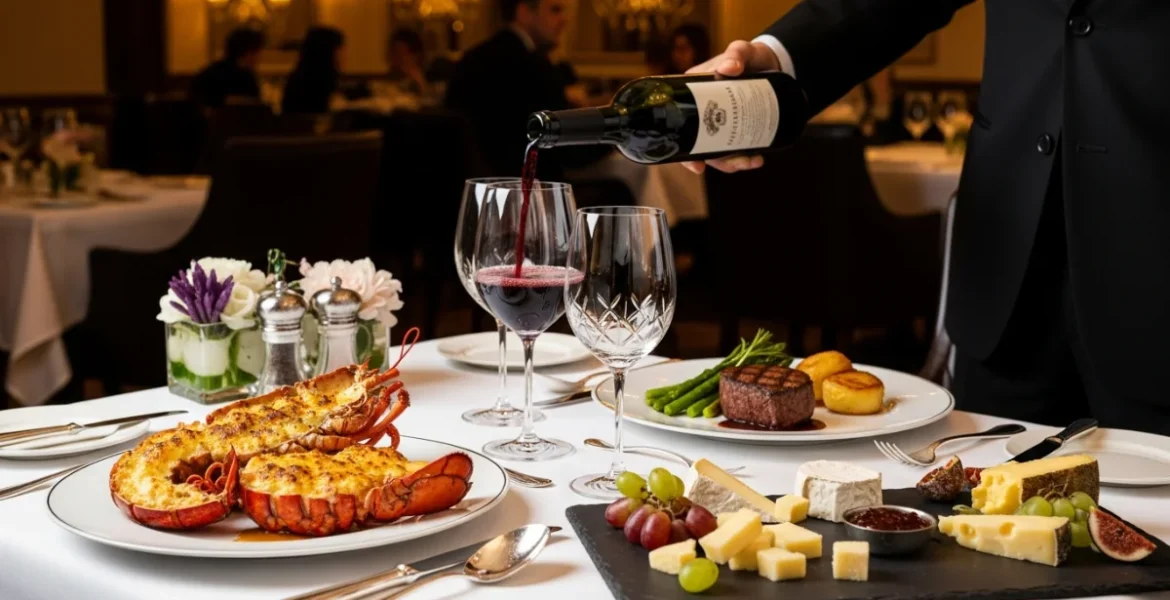
Complementary pairings highlight similar flavors in wine and food. Contrasting pairings balance one flavor with another, creating interest. For example, a buttery lobster goes beautifully with a crisp Chardonnay. A spicy dish might pair with a slightly sweet wine. Both approaches can work, depending on the meal and your taste.
Texture, Sauce, and Ingredients Matter
Texture affects how wine and food taste together. Creamy sauces call for wines with high acidity. Earthy flavors, like mushrooms or truffles, pair with medium-bodied reds. Always consider each element on the plate. The goal is to enhance, not overpower, the dish.
Wine Quality, Vintage, and Terroir: Luxury Wine Pairing
Luxury meals deserve high-quality wines. Vintage influences aroma, structure, and complexity. Terroir gives wine unique characteristics that reflect its origin. Serving a well-chosen bottle makes the dining experience unforgettable. Guests will notice the subtle differences and enjoy the experience more.
Curated Pairings: Luxury Wines with Gourmet Dishes
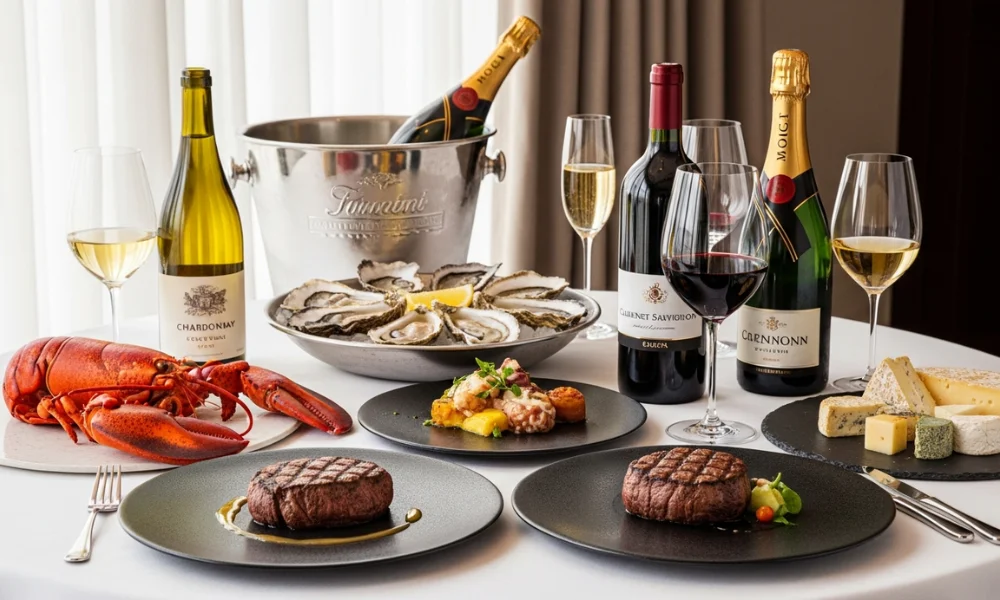
Image Source: Pinterest
Pairing wine with gourmet dishes takes a little thought. Each dish has unique flavors and textures. Choosing the right wine can make the meal unforgettable. Let’s look at some of the best wine pairings for luxury dishes.
Seafood and Shellfish: Luxury Wine Pairing
Seafood needs light and crisp wines. Lobster in butter sauce pairs wonderfully with Chardonnay. Oysters or delicate fish match mineral-rich Sauvignon Blanc. Sparkling wines and Champagne also work beautifully. These wines enhance flavors without overwhelming the dish.
Rich Meats and Game: Luxury Wine Pairing
Full-bodied red wines suit rich meats perfectly. Filet mignon with truffle butter pairs with Cabernet Sauvignon. Duck confit or venison works well with aged Bordeaux or Nebbiolo. Lighter reds, like Pinot Noir, complement softer meats. Always consider the intensity of the dish and wine together.
Creamy, Rich Sauces and Pasta
Cream-based sauces need wines with enough acidity. Oaked whites or medium-bodied reds pair beautifully with mushroom sauces. Balanced wines prevent the dish from feeling heavy. This approach makes every bite smooth and delicious.
Cheese, Charcuterie, and Starters
Appetizers like cheese or charcuterie need versatile wines. Sparkling wines balance salty meats perfectly. Medium reds or rich whites enhance foie gras. Always think about flavors, textures, and presentation for an elegant start to the meal.
Desserts and Sweet Courses
Desserts need careful wine pairing. Sweet wines, like Sauternes, complement rich desserts. Off-dry whites or fortified wines also work well. Avoid wines that overpower the dish. The goal is harmony between sweetness, flavor, and texture.
Course-by-Course Wine Pairing for a Luxury Meal
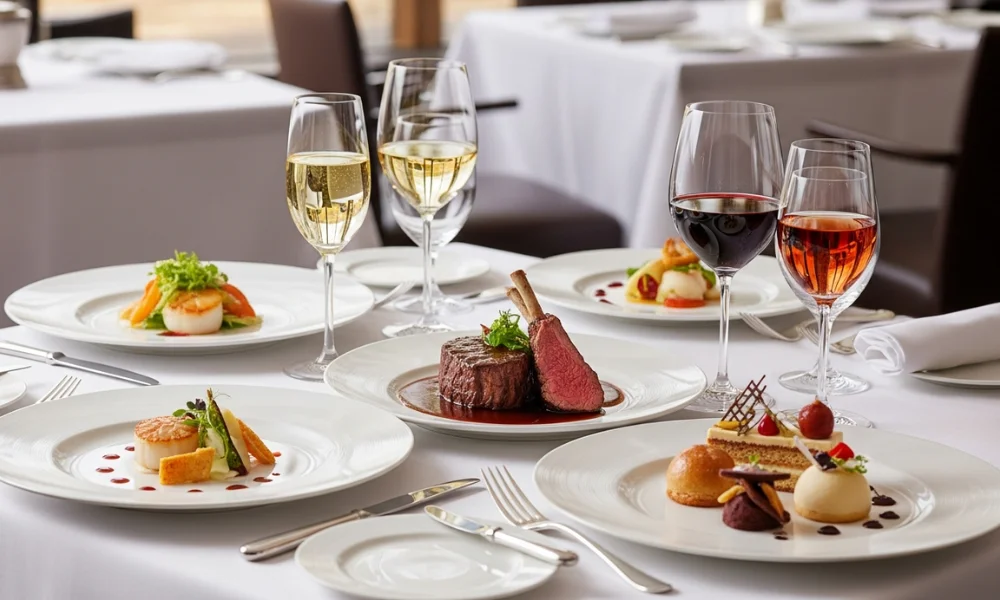
Image Source: Pinterest
Luxury meals often have multiple courses. Pairing wine with each course makes the meal complete. Let’s explore how to choose wines for starters, mains, and desserts.
Starter / Appetizer
Starters need lighter wines. White, sparkling, or light reds work best. Think seafood, salads, or charcuterie. These wines prepare the palate for the next course.
Main Course
Main courses need careful pairing. Rich meats require bold reds. Creamy pastas pair with medium-bodied wines or oaked whites. Always consider the sauce, texture, and dish intensity. Balanced wine and food make a luxurious experience.
Dessert / Cheese Course
Desserts need sweet or off-dry wines. Chocolate goes well with rich reds or fortified wines. Cheese courses pair with sparkling or medium-bodied whites. Balance is key to maintaining elegance in the final course.
Practical Tips and Etiquette for Serving Luxury Wine
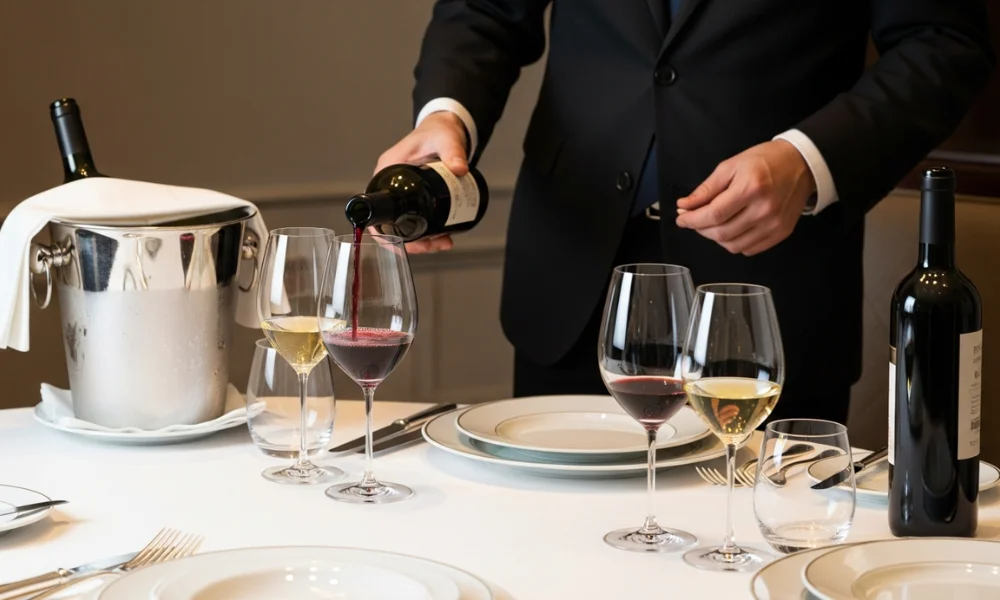
Image Source: Pinterest
Serving luxury wine requires attention to detail. Temperature, glassware, and presentation matter. Consider guest preferences while keeping sophistication. Proper etiquette makes the experience more memorable.
Serving Temperature and Glassware
Temperature affects wine flavor greatly. Whites and sparkling wines should be chilled. Reds are best slightly below room temperature. Glass shape and size also enhance aroma and taste.
Palate Cleansing and Order of Wines
Serve wines from light to heavy. Cleanse the palate with water or mild foods between wines. This ensures each sip tastes fresh. Following this order improves overall enjoyment.
Thinking of Guest Preferences and Flexibility
While pairing rules are helpful, consider guest tastes. Some may prefer lighter reds or sweeter wines. Flexibility ensures everyone enjoys the meal. Offering options shows thoughtfulness and care.
Experimentation and Personal Taste: The Final Word on Pairing
Luxury wine pairing is part knowledge, part personal taste. Rules guide you, but experimentation matters. Try unusual combinations to find unique matches. Record your favorites for future meals. Remember, the main goal is enjoyment and creating memorable experiences.
Table: Quick Reference for Luxury Wine Pairing
| Dish Type | Suggested Wine Type |
|---|---|
| Lobster & Butter Sauce | Chardonnay, Sparkling Wine |
| Oysters & Shellfish | Sauvignon Blanc, Champagne |
| Filet Mignon / Beef | Cabernet Sauvignon, Bordeaux |
| Duck Confit / Game Meats | Nebbiolo, Pinot Noir |
| Cream-based Pasta or Sauces | Oaked White, Medium-bodied Red |
| Cheese / Charcuterie | Medium Reds, Rich Whites, Sparkling Wines |
| Chocolate or Rich Dessert | Dessert Wines, Fortified Wines |
Conclusion: Luxury Wine Pairing
Luxury wine pairing can transform any meal into an unforgettable experience. Understanding body, acidity, tannins, and sauces ensures perfect matches. Consider each course, from starters to desserts. Flexibility, experimentation, and attention to detail make the meal elegant. With practice, you can confidently pair wines with luxury meals. Impress your guests and enjoy a truly memorable dining experience.