

Luxury Watch Auctions 2025: Calendar, Costs and Bidding Guide
Luxury watch auctions 2025 are one of the most effective ways for US buyers to access rare timepieces with documented provenance, public pricing history, and verified market demand. However, auctions are not simply about buying a luxury watch they are about buying correctly.
Therefore, buyers who understand the process, fees, and evaluation basics consistently make stronger decisions than buyers who bid emotionally. At the same time, auctions in 2025 are easier to access because online bidding and global viewing systems have expanded. Still, convenience can increase risk, especially when buyers underestimate total costs or misunderstand condition notes.
Consequently, this guide focuses on what buyers actually need: how auctions work, what you really pay, how to evaluate lots quickly, how to avoid common risks, and how to bid strategically without wasting time.
What You Must Know Before Bidding in Luxury Watch Auctions
Luxury watch auctions influence the entire resale ecosystem because they act as price discovery. In other words, auction outcomes often shape how dealers, collectors, and marketplaces price the same references. Therefore, if you want to build authority as a buyer, you should treat auctions as both a purchase opportunity and a learning system.
Additionally, auctions offer a major trust advantage over casual resale platforms because listings usually include specialist notes, high-resolution images, and provenance disclosures. However, the buyer remains responsible for evaluation. So, the best approach is to combine auction-house information with your own structured checklist and cost framework.
How Luxury Watch Auctions Work
Auction listings typically include an estimate, a description, and sometimes condition notes. The estimate is the auction house’s valuation range, while the reserve is the seller’s minimum acceptable price. Meanwhile, the hammer price is the final winning bid when the auctioneer closes the lot. However, if the reserve is not met, the watch may not sell even if bidding is strong.
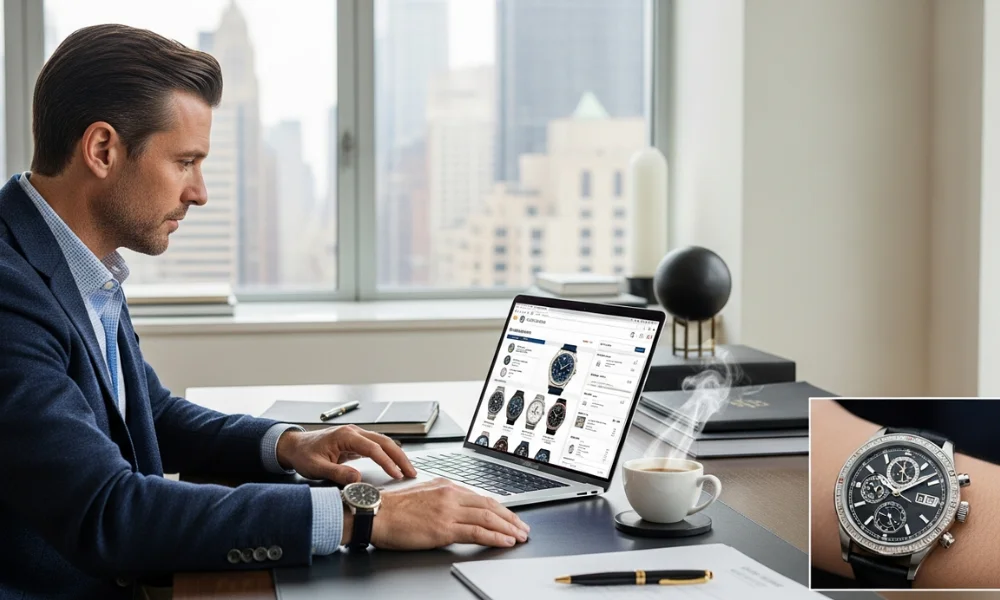
Bidding can happen in-room, by phone, online, or through absentee bids. Although these methods differ in experience, they all carry the same rule: once you win, the purchase is binding. Therefore, your control must come from preparation, not the moment.
The Real Total Cost
A winning bid is not your final cost. Instead, you pay the hammer price plus fees and logistics, which can significantly change your actual spend. Therefore, expert buyers calculate the maximum they can afford based on the all-in cost, not the headline bid.
Use this simple cost structure before you place any bid:
Hammer price (your winning bid)
Buyer’s premium (auction fee, often 20–30% depending on house and tier)
Sales tax or import duties (depends on where the watch ships)
Shipping + insurance
Potential servicing costs after purchase
For example, a $20,000 hammer price can become $26,000–$30,000 after fees and logistics, depending on the sale and location. As a result, if you bid based on hammer price alone, you can easily exceed your real budget.
How to Evaluate a Lot Like an Expert
Most buyers focus on brand and model. However, long-term value is mainly driven by originality, condition, and documentation. Therefore, you should evaluate the watch like an asset, not a photo. Start with the case shape and edges because heavy polishing removes definition and reduces collector demand.
Then, check the dial carefully because redials and relumed markers can reduce value even if they look attractive. Additionally, check the hands, bezel, and bracelet because replacement components may affect authenticity and resale strength. Finally, inspect movement images if available, since corrosion or wear can indicate costly future work.
Importantly, auction houses may disclose replacements in subtle language. Therefore, you should treat phrases like “later,” “replacement,” “service,” or “restored” as pricing signals.
Provenance and Documentation
In 2025, provenance is increasingly important because buyers want reduced risk. Consequently, watches with strong documentation often sell faster and hold value better. Additionally, a clean paper trail improves future resale, which matters if you want liquidity.
Strong documentation may include original invoice, retailer stamp, box and papers, service records, or consistent ownership history. Even when a watch is genuine, weak documentation can lower buyer confidence later. Therefore, if you want authority-level buying decisions, prioritize watches with verifiable history whenever possible.
Hidden Risks to Avoid
Even high-quality auctions can include watches with mixed parts or restorations that reduce collectible value. Therefore, you should learn the biggest risk categories and treat them as deal filters. The highest-risk issues include franken watches, aftermarket parts presented as original, incorrect dial variants, heavy restoration, and mismatched reference configurations.
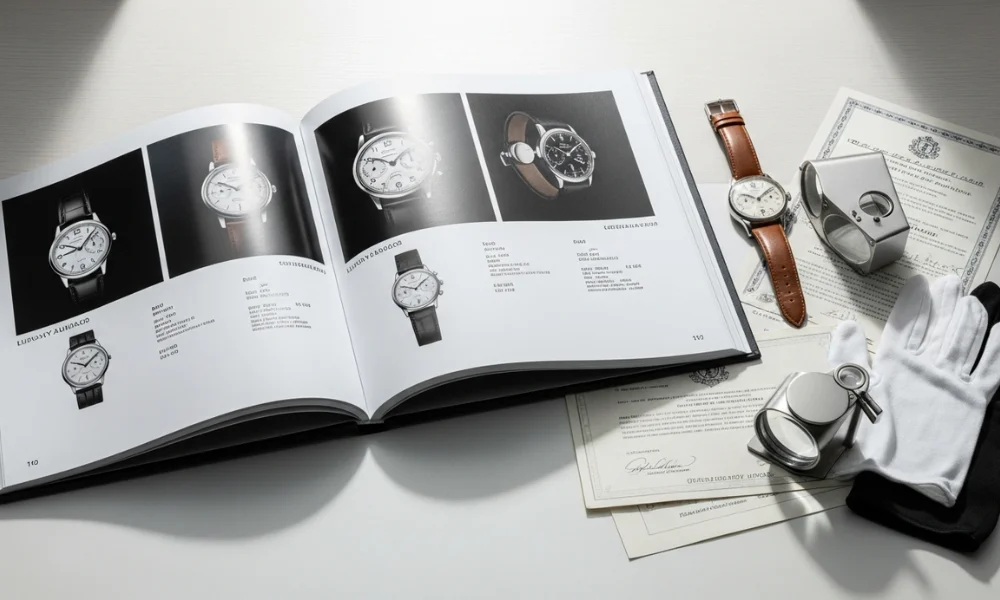
Additionally, “too perfect” vintage watches can be suspicious, especially when the dial looks newer than the case condition suggests. As a result, verification matters more than aesthetics. If you’re bidding on a high-value lot, third-party inspection or expert review can be worth it.
However, even without that, you can protect yourself by comparing the lot against verified examples and reviewing past auction outcomes for the same reference.
Smart Bidding Strategy for 2025
Auction success depends on discipline. Therefore, your best strategy is to create limits and stick to them. Online bidding increases speed and emotion, so structure is essential. Here’s a clean strategy that works consistently:
Set your maximum all-in price before the auction starts
Bid only when the watch meets your evaluation checklist
Use absentee bids if you’re prone to chasing
Avoid “last-second” escalation unless your numbers support it
Walk away when the price exceeds your ceiling, even if you want it
Additionally, remember that rarity doesn’t automatically equal desirability. Therefore, prioritize references that are both collectible and liquid, especially if your goal includes resale flexibility.
Which Auction Types Are Best for US Buyers in 2025
Not every auction format fits every buyer. However, you can choose formats based on risk tolerance and budget. Major seasonal sales often have the best inventory, yet they also attract global competition. Meanwhile, online-only auctions can offer stronger value because many bidders focus on headline sales elsewhere.
Not every auction format fits every buyer. However, you can choose formats based on risk tolerance and budget. Major seasonal sales often have the best inventory, yet they also attract global competition. Meanwhile, online-only auctions can offer stronger value because many bidders focus on headline sales elsewhere.
Additionally, single-owner collections tend to have stronger documentation and consistency, which reduces uncertainty. Therefore, if you want safer buying conditions, curated thematic sales and single-owner lots can be excellent options. In the same way, fashion collectors can also make smarter choices by learning what’s trending—explore the top luxury streetwear brands 2025 to understand what pieces hold long-term value.
Trends Shaping Luxury Watch Auctions 2025
In 2025, several trends are influencing outcomes. First, online bidding continues to expand, which increases competition for popular references. Second, independent watchmakers and limited-run modern pieces are gaining auction momentum.
Third, buyers are placing more value on documentation, completeness, and originality. Therefore, watches that combine strong condition and provenance often outperform trend-driven hype pieces. At the same time, certified pre-owned programs are shaping buyer expectations.
Buyers now compare auction pricing against brand-backed resale options, which increases demand for transparent, well-documented lots. Consequently, quality and clarity matter more than ever.
FAQs: Luxury Watch Auctions 2025
How much is the buyer’s premium in luxury watch auctions?
It varies by auction house and price tier, but it’s commonly 20–30%. Therefore, always calculate total cost before bidding.
Can US buyers bid in Geneva or international auctions?
Yes. Most major auctions offer online, phone, and absentee bidding, so Americans can participate globally.
What’s the biggest mistake first-time buyers make?
They bid based on hammer price instead of all-in cost. Additionally, they overlook condition details and originality issues.
Are auction watches always cheaper than retail?
Not always. Some pieces sell above retail due to demand and scarcity. However, auctions can offer value when a lot is under-followed or overlooked.
How do you avoid buying a watch with non-original parts?
Cross-check reference details, study dial variations, review lot notes carefully, and compare against verified examples. If the price is high, expert verification is worth it.
Conclusion
Luxury watch auctions 2025 can be one of the best ways for US buyers to acquire rare watches with market transparency and stronger provenance than most private sales. However, auctions are only “smart” when you understand total cost, evaluate originality quickly, and avoid predictable risks. Therefore, discipline and preparation are the real advantages, not speed or confidence.
Additionally, auctions are a powerful authority-building tool because they teach you what the market truly values. When you approach each lot with a structured checklist and a controlled bidding ceiling, you protect your budget while building a collection that is credible, liquid, and long-term valuable. Meanwhile, if you’re also tracking bigger market shifts and financial trends, this guide on global startup funding 2025 offers valuable insight into where investment confidence is heading.