
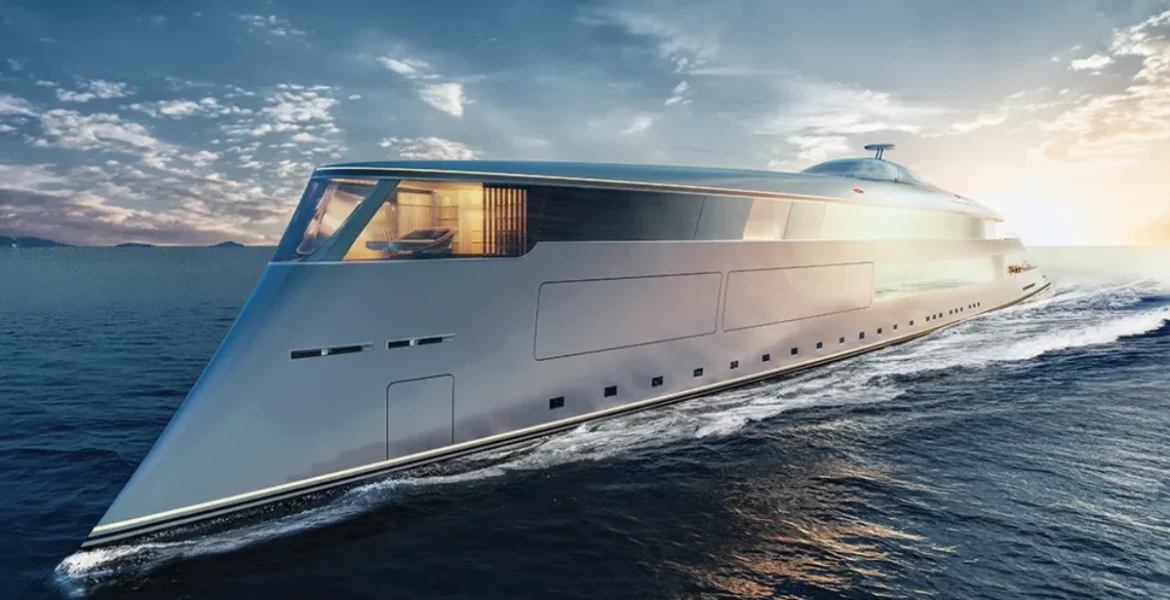
Future of Yacht Engines: Hybrid, Hydrogen, and Beyond
The future of yacht engines is shifting from pure diesel to a mix of hybrid, hydrogen, electric, and biofuel propulsion. Hydrogen powered yachts like the Hynova 40 are already in production, hybrid systems cut fuel use by up to 65 percent, and clean energy marine technology is reshaping next-gen superyachts. By 2030, multi-fuel propulsion will be the new luxury standard.
Yacht engines are going through their biggest shift in a hundred years. The diesel growl that defined luxury cruising for decades is fading. In its place, a quieter, cleaner, smarter generation of marine power is taking over. Tighter emissions rules, owner demand for silent harbors, and clean energy marine breakthroughs are pushing the entire industry forward at speed.
Why the Future of Yacht Engines Is Changing Right Now
The shift is not happening because owners suddenly want green badges. It is happening because regulators, costs, and tech all hit at once. The IMO Tier III rules now demand sharp cuts in nitrogen oxide emissions. Meanwhile, the EU’s FuelEU Maritime framework is forcing yachts to report and reduce greenhouse gas intensity year after year.
Owners are paying attention too. Silent cruising is now a luxury feature, so builders are racing to deliver it. Also, resale values are climbing for cleaner builds, whether the buyer cares about emissions or not. Basically, the math has flipped. Going green is no longer a sacrifice. It is the smart investment.
Diesel Is Not Dead: But It’s Evolving
Diesel still rules the seas. It packs the most energy per liter, the infrastructure is everywhere, and engines from MAN, Caterpillar, MTU, and Volvo Penta have decades of trust behind them. So diesel is not going anywhere soon.
What is changing is the fuel itself. Hydrotreated Vegetable Oil, known as HVO, drops straight into existing tanks with zero engine modifications. Also, it cuts lifecycle carbon emissions sharply and burns cleaner, so filters and exhausts stay healthier. Synthetic e-fuels are next in line. Consequently, the diesel engine of 2030 will look identical to today’s, but the fuel running through it will be radically different.
Hybrid Propulsion: The Bridge to Next-Gen Superyachts
Hybrid systems are the single biggest force shaping next-gen superyachts right now.
Parallel vs Serial Hybrid Systems
A parallel hybrid links a diesel engine and an electric motor to the same shaft, so either one can drive the boat. A serial hybrid runs the propellers purely on electric motors, with diesel generators feeding the batteries. Basically, parallel is simpler and serial is smoother.
Project Artefact proves the case. The 80-meter yacht crosses the Atlantic on just one diesel engine, with battery support for short hops. Her captain reported diesel savings of 20 to 30 percent in real-world conditions.
Why Hybrid Is Winning the Mid-Market
Hybrid systems can save up to 65 percent on fuel and generator hours. Also, they deliver silent harbor stays, redundancy when something fails, and zero-emission maneuvering in tight marinas. So for owners who want luxury without the guilt, hybrid hits the sweet spot today.
Hydrogen Powered Yachts: The Zero-Emission Frontier
Hydrogen is the fuel everyone watches. It produces zero CO2, zero NOx, and zero noise. The only byproduct is water.
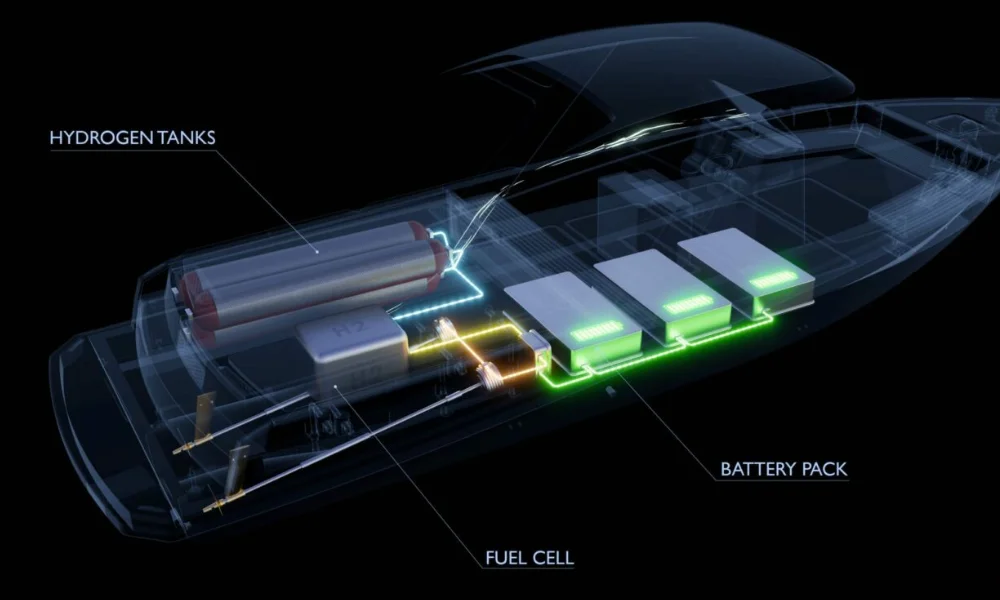
How Hydrogen Fuel Cells Work in the Future of Yacht Engines
A fuel cell mixes hydrogen with oxygen to generate electricity. The electricity drives the motors, whether for propulsion or for the hotel load that powers lights, kitchens, and air conditioning. There is no combustion. Also, there is no vibration, so the yacht runs almost silently.
Real Hydrogen Yacht Projects Worth Knowing
The Hynova 40 became the first production hydrogen powered yacht and is already on the water. Lürssen confirmed it is building a superyacht with a fuel cell installed onboard. Baglietto’s BZERO project takes things further by producing hydrogen from seawater using onboard electrolysers. Meanwhile, the Energy Observer catamaran has been circling the globe since 2017, fully energy-autonomous. Consequently, hydrogen has moved from concept to reality faster than most predicted.
Fully Electric and Solar-Assisted Yachts
Pure electric yachts work brilliantly in the right conditions. Battery-electric drives suit day yachts, lake cruisers, and coastal weekenders. Also, electric motors are more efficient than diesel because there is no gearbox loss between motor and shaft.
The Xquisite 60 Solar Power shows what is possible. Solar panels on the hardtop charge lithium battery packs, so the yacht can run silently for hours without burning a drop of fuel. The honest limits are real though. Range stays short, charging stations are rare, and a complex electronic system can fail in remote anchorages. So fully electric works best for short distances and harbor use, not for ocean crossings.
Methanol, Ammonia, and Nuclear: The Long-Range Bets
Hydrogen is not the only zero-carbon path. Methanol stores far more easily, so MAN and other engine makers are already building methanol-ready engines. Ammonia is the dark horse for transoceanic range, since it carries hydrogen in a denser form. Meanwhile, nuclear micro-reactors sound wild, but designs from naval engineers like Munro Yachts propose sealed units that could power a superyacht for a decade without refueling.
Nuclear adoption will be slow. Regulators, ports, and insurers all need to catch up. So expect methanol first, ammonia second, and nuclear as a long-term bet for the 2035-and-beyond crowd.
Yacht Engine Types at a Glance
| Engine Type | Range | Emissions | Cost | Best For |
|---|---|---|---|---|
| Diesel (HVO) | Excellent | Low | $ | Long-range cruising |
| Diesel-Electric | Excellent | Medium | $$ | Explorer yachts |
| Hybrid | Very Good | Low | $$ | Mid-size luxury yachts |
| Hydrogen Fuel Cell | Limited | Zero | $$$ | Coastal and demo builds |
| Fully Electric | Short | Zero | $$ | Day yachts and lakes |
| Nuclear (concept) | Unlimited | Zero | $$$$ | Future superyachts |
2026–2035 Adoption Timeline for Clean Energy Marine Propulsion
The shift will not happen overnight, so here is a realistic roadmap.
- 2026 to 2028: HVO becomes the default fuel. Hybrid is standard on new builds over 30 meters.
- 2028 to 2030: Hydrogen powered yachts under 40 meters enter commercial production.
- 2030 to 2032: Methanol-ready engines roll out across the superyacht segment.
- 2033 to 2035: Ammonia trials begin and the first nuclear pilot gets regulatory approval.
Which Yacht Engine Should You Choose?
The right engine depends on how you actually use the yacht.
- Day cruising and lakes: Go fully electric. Quiet, simple, low maintenance.
- Coastal Mediterranean lifestyle: Hybrid wins. Silent harbors and big fuel savings.
- Transatlantic explorer: Diesel-electric with HVO. Range plus cleaner emissions.
- Future-proofing investment: Pick a hydrogen-ready hybrid build, so retrofits are easy when fuel networks mature.
Conclusion
The future of yacht engines is multi-fuel, quieter, and cleaner than the industry has ever seen. Hydrogen powered yachts are already cruising. Hybrid systems are saving owners up to 65 percent on fuel. Also, clean energy marine technology is reshaping how next-gen superyachts are designed from the keel up. The diesel era is not ending, it is evolving alongside a fleet of new options.
At Orilea, we will keep covering the boats, the breakthroughs, and the brands defining the next chapter of luxury at sea.
Frequently Asked Questions
What is the future of yacht engines?
The future of yacht engines is multi-fuel propulsion. Hybrid, hydrogen, electric, and biofuel systems will replace pure diesel by 2035. Clean energy marine tech is already mainstream on new luxury builds.
Are hydrogen powered yachts already in production?
Yes. The Hynova 40 is the first production hydrogen yacht, and Lürssen is building a hydrogen superyacht. Baglietto’s BZERO project is also nearing launch.
How much fuel can hybrid yacht engines save?
Hybrid yacht engines can cut fuel use and generator running hours by up to 65 percent. Also, they deliver silent harbor stays and zero-emission maneuvering.
What is the cleanest yacht engine available today?
Hydrogen fuel cells produce zero emissions and zero noise, so they are the cleanest option. Hybrid is the most practical runner-up for everyday use.
Will nuclear powered yachts ever exist?
Yes, concepts are in active development. Sealed micro-reactors could power a superyacht for ten years on one charge, but commercial approval is still ten years away.