
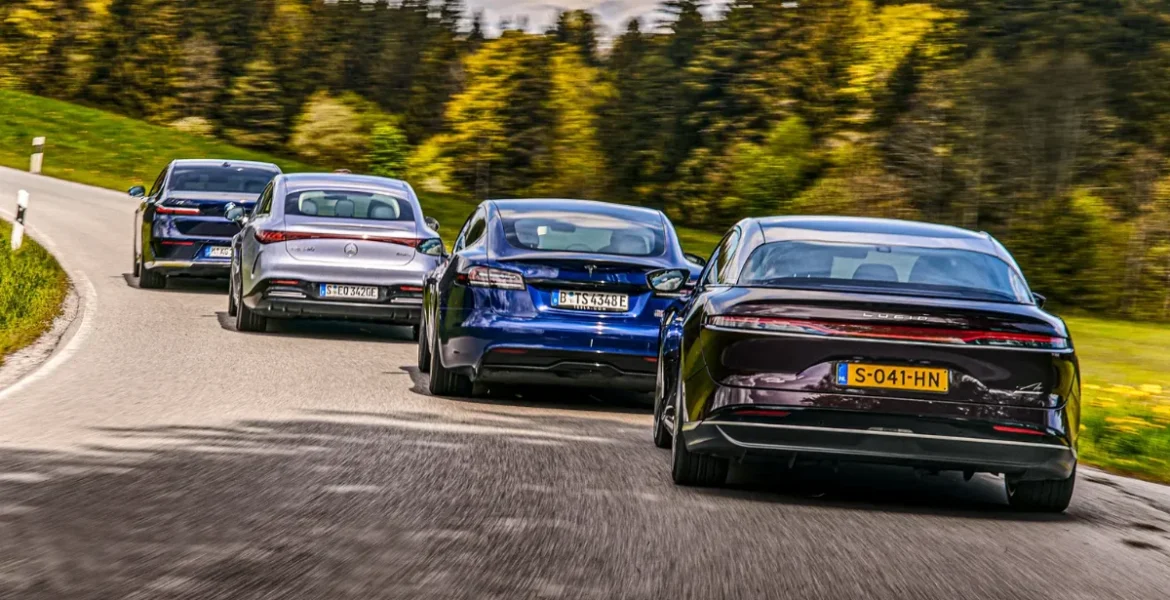
Luxury Electric Hypercars: The 7 Best Models for 2026
The era of luxury electric hypercars has officially shifted from concept to collector’s item, with 2026 marking a definitive peak in high-voltage performance. At Orilea, we understand that for the modern connoisseur, true luxury isn’t just about a badge it’s about the intersection of breathtaking craftsmanship, exclusivity, and zero-emission physics.
Today, these silent beasts aren’t just concepts on a screen; they are being deliveElectric sports cars Electric sports cars red to private garages from Miami to Monaco. This curated guide explores the seven most coveted high-end EVs of the year, their multi-million dollar price tags, and what it truly means to own a piece of the electric frontier.
| Hypercar | Power (HP) | 0–60 mph | Top Speed | Price (USD) | Production |
| Pininfarina B95 | 1,900 | <2.0s | 186 mph | $4.7M | 10 units |
| Rimac Nevera R | 2,107 | 1.66s | 268 mph | $2.5M+ | 40 units |
| Lotus Evija | 2,011 | <3.0s | 218 mph | $2.3M | 130 units |
| Pininfarina Battista | 1,900 | 1.79s | 217 mph | $2.5M | 150 units |
| Aspark Owl | 1,984 | 1.69s | 257 mph | $3.2M | 50 units |
| Hispano Suiza Carmen | 1,114 | 2.6s | 180 mph | $1.85M | 5 units |
| RR Spectre Black Badge | 650 | 4.1s | 155 mph | $490K+ | Limited |
What Defines a Luxury Electric Hypercar?
A luxury electric hypercar is an elite sub-category of automotive engineering that far exceeds the capabilities of standard high-end EVs. To qualify for this title in 2026, a vehicle must generally meet four strict criteria: power exceeding 1,000 HP, a 0–60 mph sprint under 2.5 seconds, hand-built bespoke craftsmanship, and a production run restricted to fewer than 250 units globally.
While a Lucid Air or a Porsche Taycan offers incredible performance for a daily driver, hypercars utilize bleeding-edge tech. This includes 800V (or higher) battery architectures for rapid thermal management, advanced torque vectoring that calculates power at each individual wheel 100 times per second, and full carbon-fiber monocoque chassis that keep weight low despite heavy battery packs.
The 7 Best Luxury Electric Hypercars to Watch in 2026
From record-breaking acceleration to bespoke Italian tailoring, these seven vehicles represent the absolute pinnacle of automotive engineering and zero-emission status in 2026.
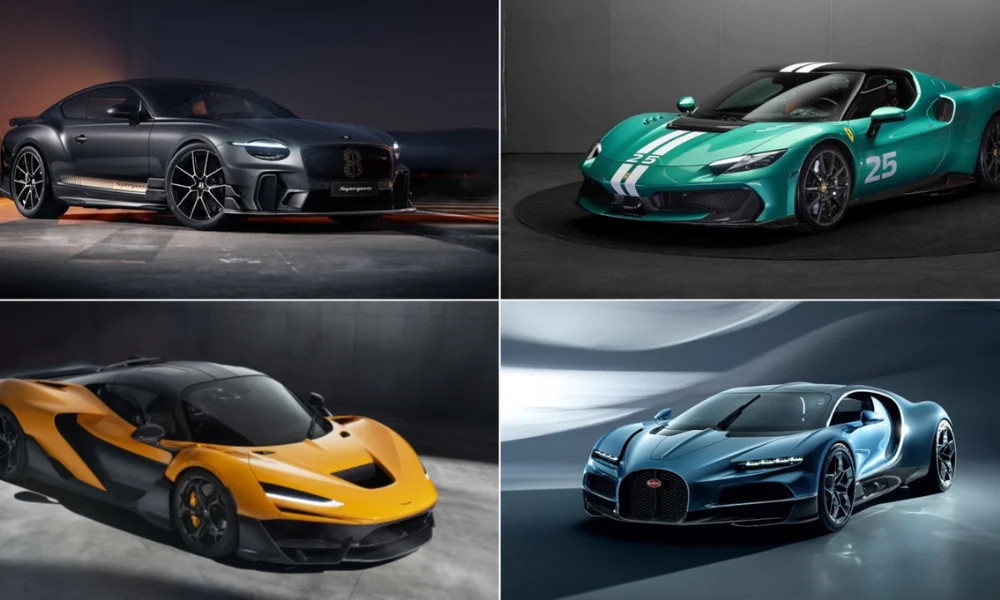
1. Pininfarina B95: The Crown Jewel of Luxury Electric Hypercars
The B95 is currently the world’s most expensive EV, retailing at a staggering $4.7 million. With only 10 units in existence, this Barchetta features an open-top design that eschews a traditional windshield for electronically adjustable aero screens. Inside, the cabin is a masterclass in Italian luxury, featuring tan bespoke leather with houndstooth accents. It is less a car and more a rolling sculpture for the ultra-wealthy.
2. Rimac Nevera R: Croatia’s Speed King
The 2026 Nevera R is the sharpened, more aggressive sibling of the original record-breaking Nevera. With 2,107 HP and a 0–60 time of just 1.66 seconds, it is the weapon of choice for collectors who value validated, world-record performance. Beyond its raw power, the engineers refined the chassis not just for straight-line speed, but for aggressive cornering. Specifically, a new fixed rear wing and a sophisticated aero package maximize downforce to keep the car glued to the tarmac.
3. Lotus Evija: British Engineering Meets Luxury EV Performance
The Evija represents the pinnacle of luxury EV performance from the legendary British marque. With 2,011 HP and a target weight that makes it one of the lightest EV hypercars ever made, it feels agile and visceral. The spectacular Venturi tunnels running through the rear bodywork aren’t just for show—they manage airflow with a level of efficiency usually reserved for Le Mans racers.
4. Pininfarina Battista: Italian Couture in High-End EVs
If the B95 is the wild sibling, the Battista is the sophisticated elder. It shares a powertrain with the Rimac but offers a vastly different experience focused on Pura design. Every Battista is a one-of-one commission; the 2026 Reversario editions showcase how owners can mirror the colors of their previous cars, creating a coordinated collection of high-end EVs.
5. Aspark Owl: Japan’s Most Exclusive Electric Hypercar
Japan’s first entry into the hyper-EV space is a low-slung, carbon-fiber marvel. Standing at less than 40 inches tall, the Owl has a 257 mph top speed. It is one of the rarest cars on this list, with only 50 units planned. Its acceleration is so violent that it requires specialized tires just to keep the rubber from disintegrating under the torque.
6. Hispano Suiza Carmen Sagrera: Hyperlux Reimagined
The Sagrera is the latest evolution of the Spanish heritage brand’s revival. In addition to its rarity, Hispano Suiza is producing only five units of this variant, each featuring an art-deco aesthetic inspired by the 1930s. However, do not let the vintage looks fool you, the 1,114 HP powertrain and massive rear wing signal a modern powerhouse designed specifically for the “couture” collector looking to dominate the lawns at Pebble Beach.
7. Rolls-Royce Spectre Black Badge: Where Luxury Electric Hypercars Meet Grand Touring
While its specs are more modest than a Rimac, the Spectre Black Badge is the ultra-luxury benchmark for 2026. It targets the buyer who wants the silence and torque of a hypercar but the unmatched magic carpet ride of a Rolls-Royce. It is the only car on this list designed to be a daily driver, offering 650 HP and a cabin that is essentially a soundproof sanctuary.
Luxury EV Performance: How Electric Hypercars Outpace Combustion Rivals
The luxury EV performance gap between electric and internal combustion engine (ICE) cars has widened significantly. Unlike a Bugatti Chiron, which needs a moment for its four turbochargers to spool up, an electric hypercar delivers 100% of its torque the instant you touch the pedal.
The lack of a traditional transmission means the power delivery is seamless there are no gear shifts to interrupt the G-force. Furthermore, by placing heavy batteries in the floor, these cars have a lower center of gravity than a Ferrari SF90, resulting in cornering stability that feels almost magnetic. In 2026, the soul of a hypercar is no longer found in the exhaust note, but in the terrifying, fighter-jet-like thrust of instant electrons.
What It Costs to Own a Luxury Electric Hypercar
Buying the car is only the first step. The hidden costs of hyper-EV ownership are significant and require a specialized financial approach:
- Insurance: Expect to pay $20,000–$50,000 annually. Most standard carriers won’t touch these; you’ll need a specialist like Hagerty or Chubb.
- Maintenance: Even without oil changes, annual check-ups run $15,000–$30,000. OEM-trained technicians often have to fly to your location to service the vehicle.
- Charging Infrastructure: A standard home outlet won’t work. A Level 3 DC fast-charging setup for a private garage can cost $15,000–$40,000, including electrical panel upgrades.
- Battery Replacement: While rare, a full out-of-warranty battery swap for these bespoke units is estimated to cost between $80,000 and $120,000.
Interestingly, many of these cars (like the B95 and Nevera) are currently appreciating in value, similar to rare watches or fine art, making them a viable asset class for the high-net-worth individual.
Electric Sports Cars 2026: The New Releases on the Horizon
The market for electric sports cars 2026 is expanding beyond the seven greats mentioned above. This year, we are seeing the first U.S. arrivals of the Hispano Suiza Carmen Sagrera and the initial deliveries of the Pininfarina B95.
Additionally, the track-only Lotus Evija X is beginning its limited run for those who want to break Nürburgring records. We are also keeping a close eye on the rumored Maserati MC20 Folgore EV and the elusive Tesla Roadster 2, both of which promise to bring hyper-level performance to a slightly broader (though still very wealthy) audience.
Conclusion
At Orilea, we believe the rise of the luxury electric hypercar represents the perfect meeting point of our three core pillars: luxury, technology, and sustainability. These vehicles are more than just fast cars; they are rolling statements of taste and forward-thinking engineering.
Whether you are a collector looking for the next great investment or an enthusiast craving the pinnacle of speed, 2026 is the year the electric dream truly arrived. For more deep dives into the world of high-end transport, explore our latest features on Luxury Cars & Yachts.
Frequently Asked Questions
What Is the Fastest Luxury Electric Hypercar in 2026?
The Rimac Nevera R is the current king, achieving a 0–60 mph time of 1.66 seconds and a top speed of 268 mph.
What Is the Most Expensive Luxury Electric Hypercar?
The Pininfarina B95 holds this title with a price tag of $4.7 million, largely due to its open-top design and 10-unit exclusivity.
Are Luxury Electric Hypercars a Good Investment?
Extremely limited models like the B95 and Nevera R have shown strong potential for appreciation. However, higher-production luxury EVs like the Rolls-Royce Spectre are expected to follow more traditional luxury car depreciation curves.
Can You Daily-Drive a Luxury Electric Hypercar?
The Rolls-Royce Spectre and Pininfarina Battista are refined enough for daily use. However, track-focused models like the Aspark Owl or Lotus Evija are generally too low and stiff for comfortable street commuting.